- Services
- Packaging rendering
Packaging in 3D, before it goes to print.
Packaging renders are built from the dieline and the artwork, the same data that goes to print anyway. That lets you show, approve and advertise a pack long before the first run comes off the line.
Why packaging is its own case
A product has a shape. A pack has a shape, a surface and a finish, and all three have to work together. That is exactly where most generic renders fail: the artwork sits flat on the geometry instead of being printed onto it.
The difference shows immediately. A folding carton has crease lines where light breaks differently than across the face. It has a board thickness that is visible at the opening. It has a board tone that shows through the print. Without those, the box reads as a printed cuboid.
What is taken straight from your print data
- Dieline and cutting contour. The geometry is built from the same contour that will later be die-cut, including flaps and crease lines.
- Artwork as vector. PDF, AI or EPS, so fine typography and barcodes stay sharp in close-up.
- Finish specifications. Where the spot varnish sits, where the hot foil runs, what is matte and what is gloss, where the emboss is. These are built as separate layers rather than painted into the image.
- Material specifications. Board thickness, surface, coated or uncoated. That determines how softly light falls off across the face.
What packaging renders are used for
- Approvals before print. Decision makers see the pack in convincing light instead of judging a flat layout.
- Retail presentations. Listing meetings happen long before samples are available.
- Variants and ranges. Six flavours with different labels come out of one scene rather than six shoots.
- Shop and retail. Packshots in consistent light across the whole range, even when articles are added at different times.
The point where it pays off
For a single carton a photograph is often faster. As soon as there are several variants, as soon as the artwork is not final, or as soon as promotional versions are added, the calculation tips. The geometry already exists, and every further variant is a swap of the artwork layer.
More on how the number of shots adds up: how many product images a launch actually needs.
EXAMPLE / FALZ · SELF-INITIATED STUDY
One dieline, three flavours, one film.
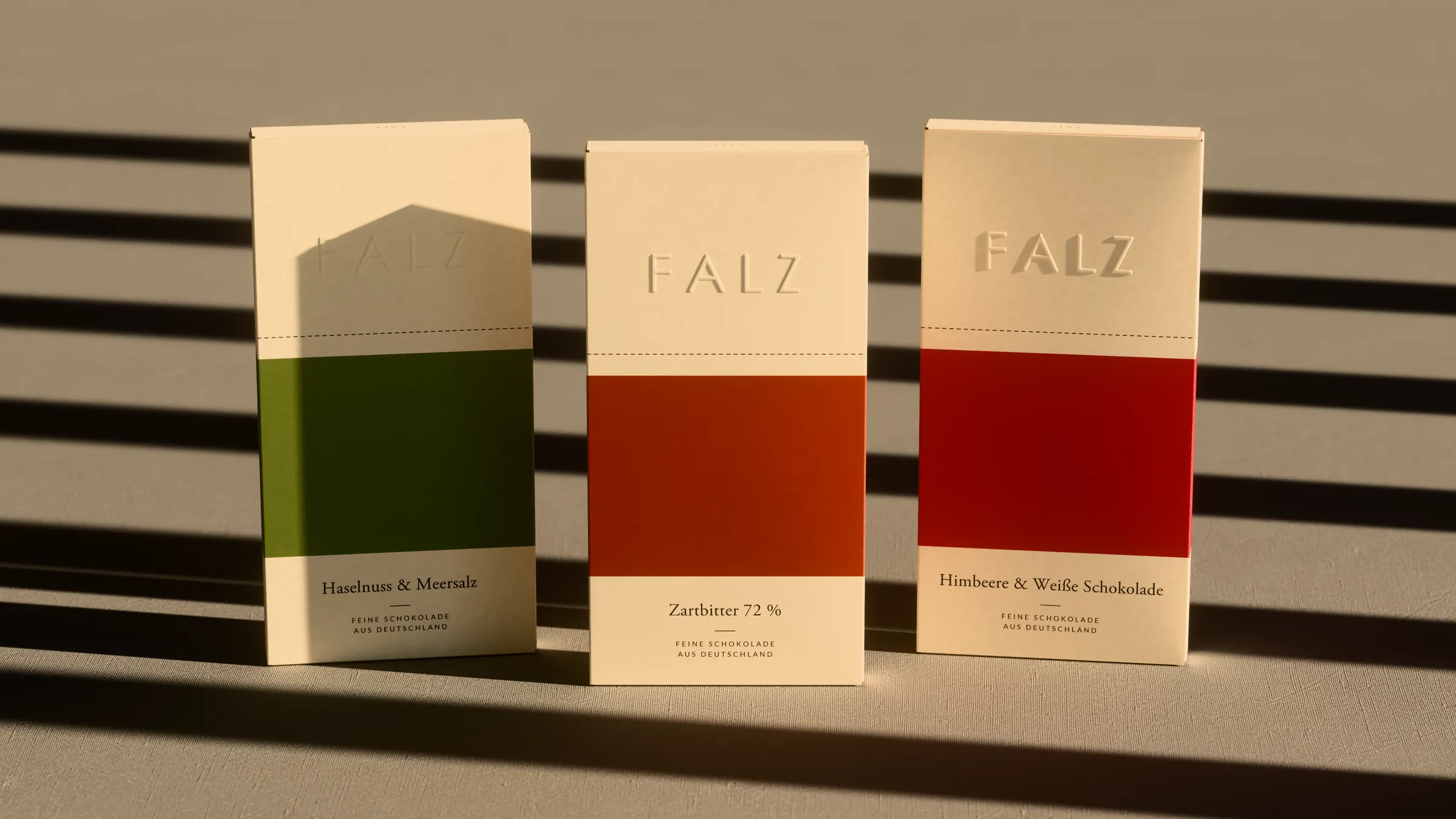
FALZ is a chocolate carton I built as a self-initiated study, starting from the dieline. Board with fibres along the cut edge, embossing as real geometry, the whole range from one scene. The film shows the carton folding itself up from the flat blank.
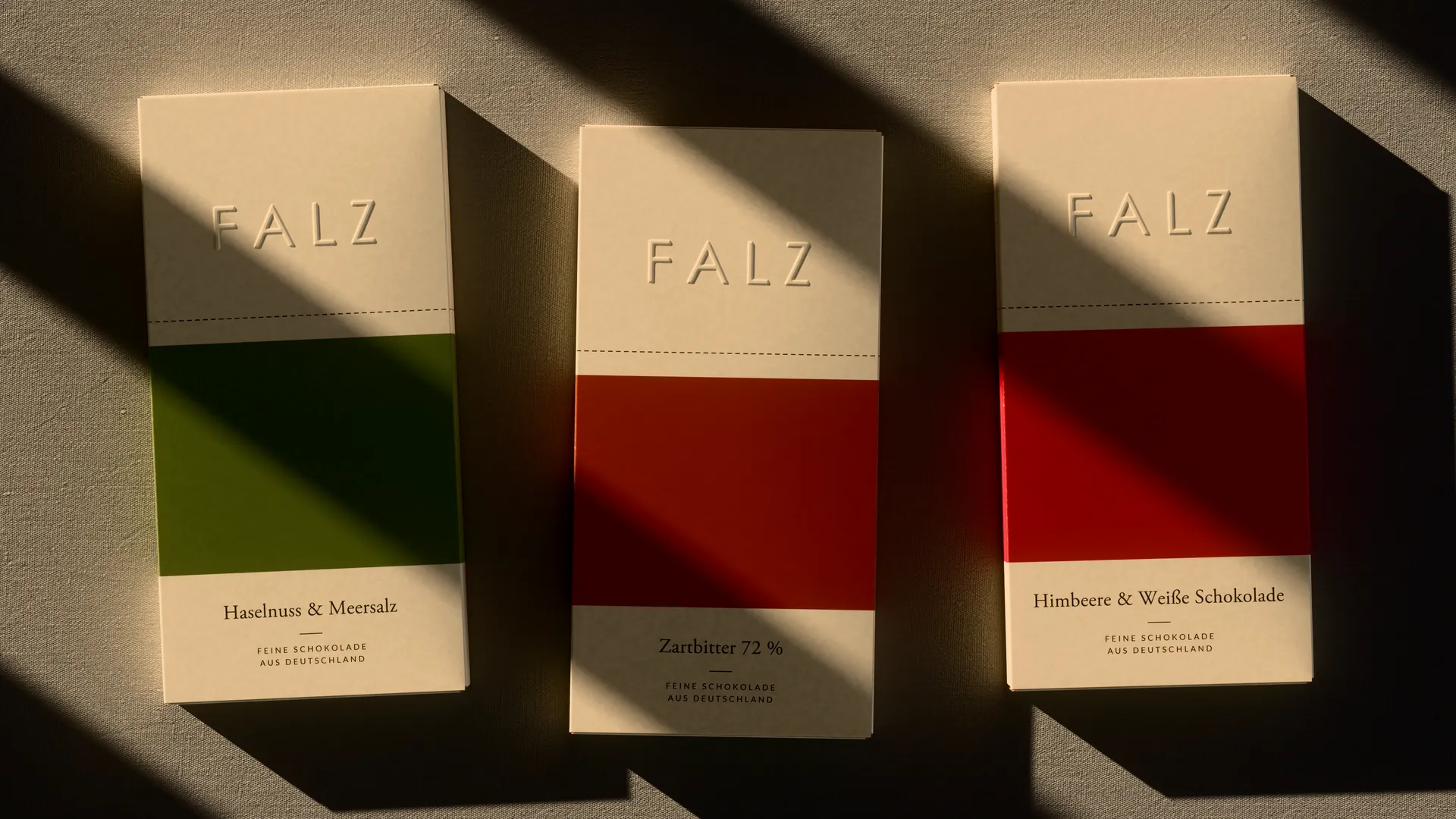
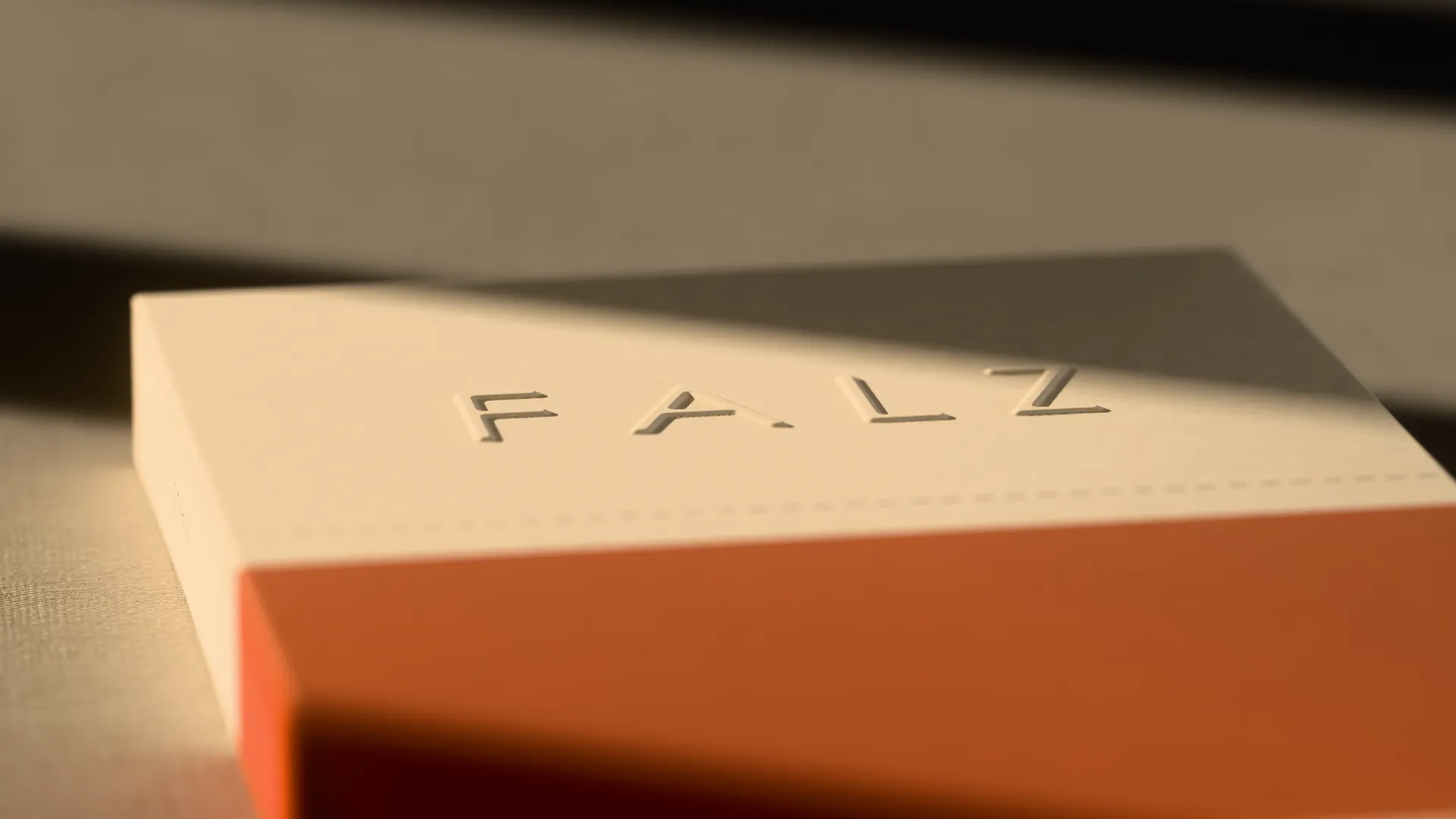
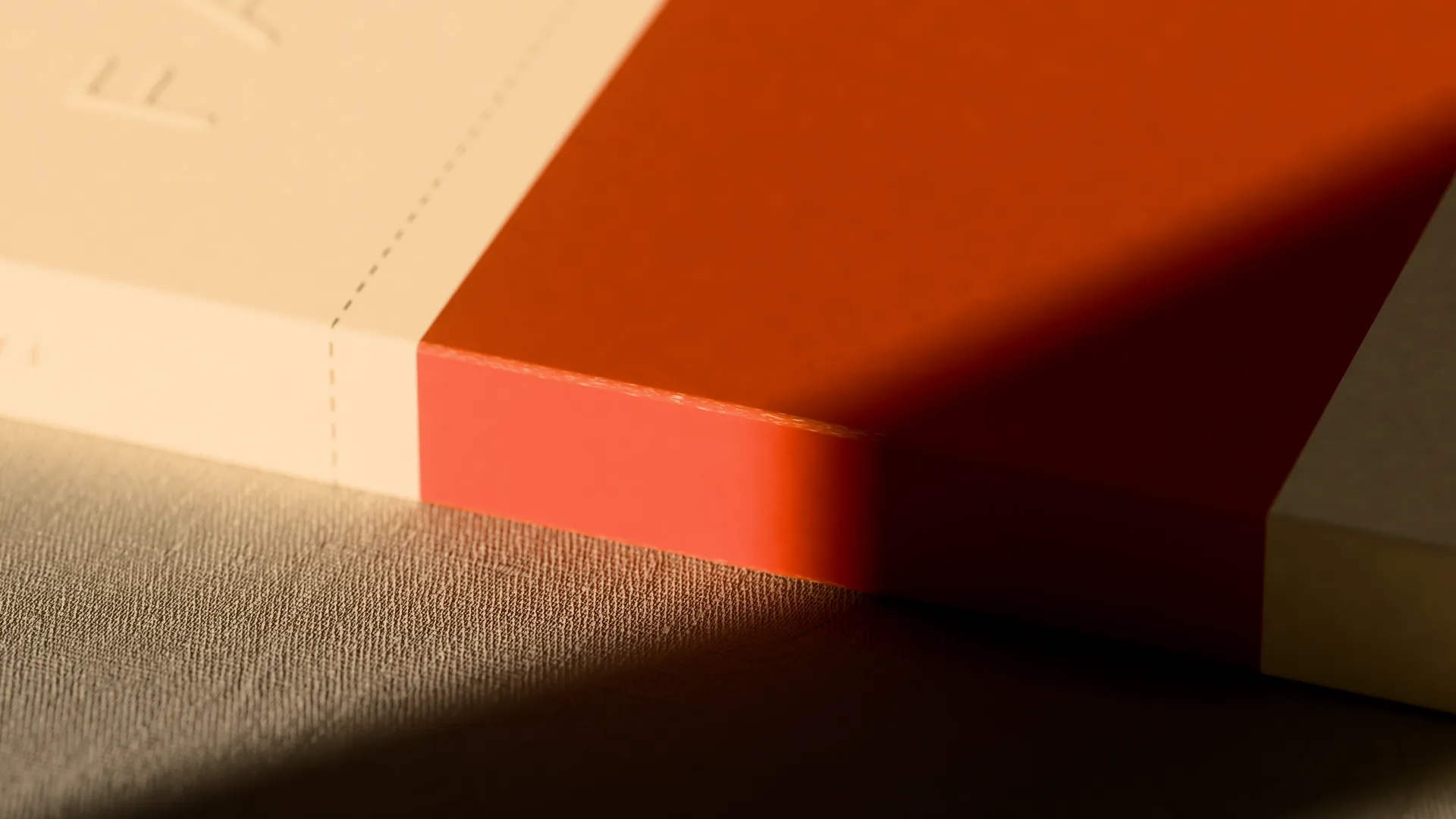
See the FALZ case with the social cut and every detail.
Frequently asked questions
The dieline as a vector file, the artwork as PDF, AI or EPS, plus information on board thickness, surface and finishes such as spot varnish, hot foil or embossing. With that, the pack is built to scale.
Yes, and that is what separates it from a generic render. The finishes are built as separate layers and therefore react to light correctly, rather than being painted in as an effect.
Yes, that is the actual advantage. Once the geometry exists, every further variant is a swap of the artwork layer under identical light and identical camera.