- Services
- Beauty product CGI
Beauty product images where the material holds up.
Beauty is the category where renders fail fastest. Glass, liquid and coated closures forgive no approximation. That is why the material work decides the result here, not the render power.
Why cosmetics is the hardest case
On a matte carton the eye forgives a great deal. On a serum in amber glass with a gold pump it forgives nothing. The product consists almost entirely of materials that only work through what happens around them: refraction, reflection, transmission.
A beauty render is therefore less a question of geometry than a question of the scene. What reflects in the glass decides whether the product reads as premium or as plastic.
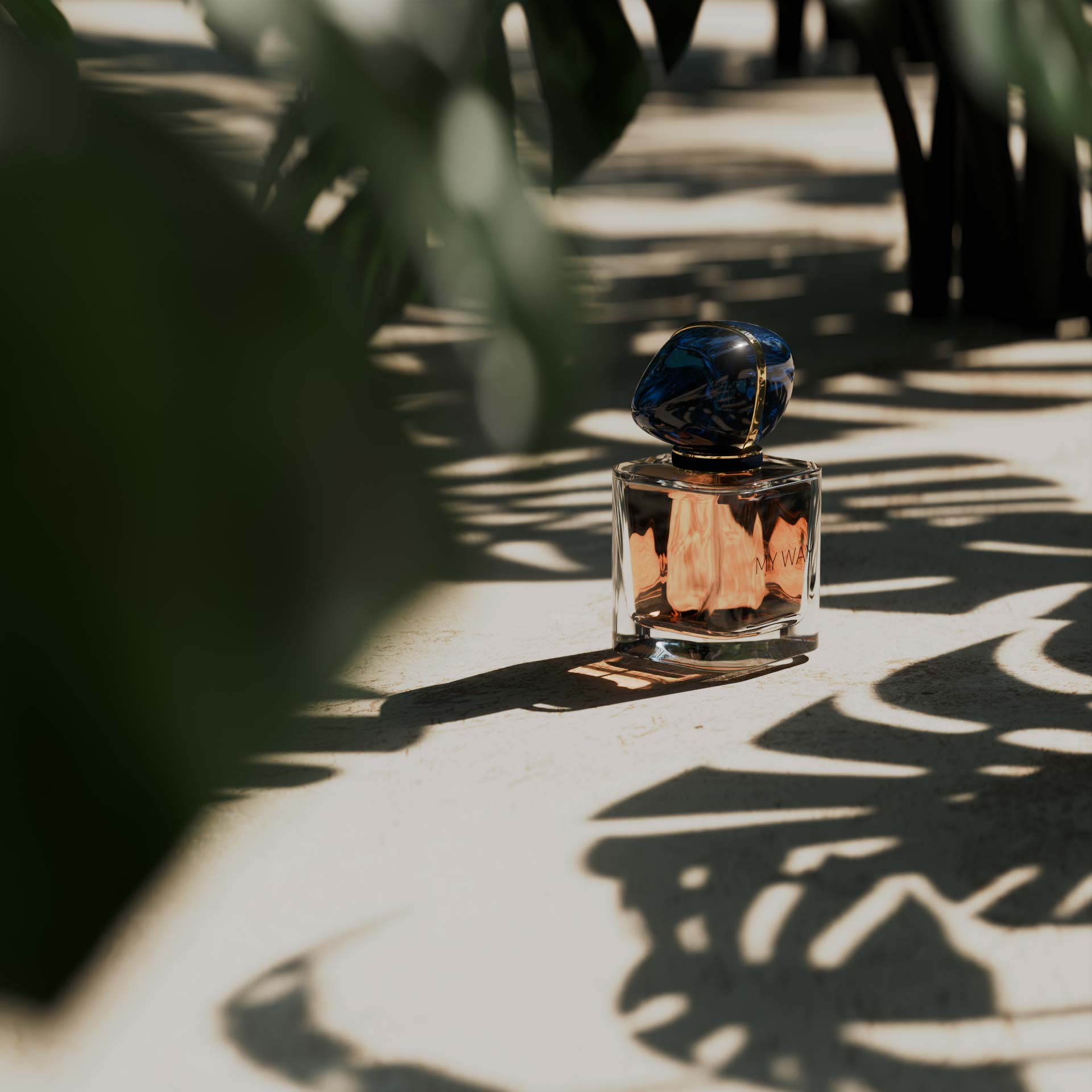
The materials it hangs on
- Glass. Wall thickness, refractive index and the edge at the base. Too thin reads cheap, too thick reads like plastic.
- Liquid inside the glass. The fill level, the meniscus edge and the colour in transmitted light. This is where most renders fall apart.
- Metallic closures. Brushed aluminium, plated gold, matte caps. Too much shine tips straight into cheap.
- Soft-touch and matte coatings. They scatter light in a way you only get right with a physical sample in hand.
- Labels. Clear carrier film, embossing, hot foil, and the fine edge where the label meets the glass.
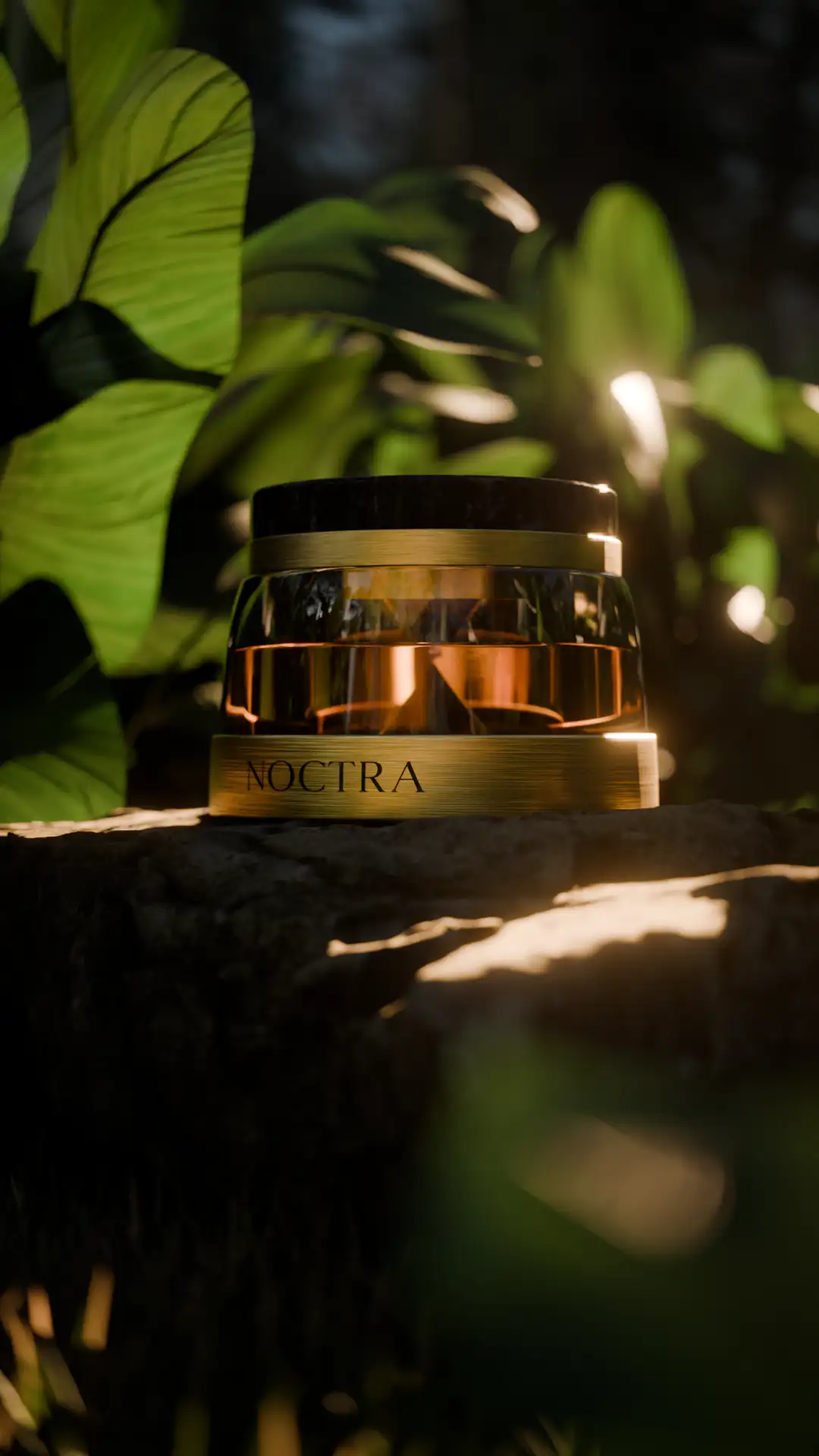
Where beauty benefits most
- Ranges with many variants. Series of six or ten come out of one scene, under identical light across the whole line.
- Launches before filling. Retail and press need images before the product physically exists.
- Later formula or label changes. A new label means a new render, not a new shoot.
- Texture close-ups. Creams, oils and serums can be shown more controllably in a built scene than on a set.
Where photography still wins
As soon as skin is involved, so hands, application, usage, photography is generally the better route. The same goes for model and lifestyle work. The sensible split is usually product and packaging from CGI, application and people from a shoot.
In detail: CGI vs product photography, when the switch makes sense.
Frequently asked questions
For glass, liquid, metal and coated surfaces yes, provided the material work is right. Skin and hair remain difficult, which is why application shots with people are still photographed.
Dimensions or CAD of the bottle, the label as a vector file, information on glass colour and fill level, and details of the closure and finish. A physical sample helps considerably with difficult surfaces.
Yes. Once the scene exists, a further variant is essentially a change of label and liquid colour, under identical light and identical camera.