- Journal
- CGI Strategy
CGI vs product photography: when CGI makes sense for brands and product launches.
Product photography is not going away. But for many brands, CGI is no longer just an alternative. In many cases, it is the better production system. This article explains when CGI makes commercial sense, where photography still has the advantage, and what that means if you are planning a product launch.
Four questions that decide it
Most of the CGI or photography debate resolves itself once you answer four questions about your specific product. Everything after that is preference.
1. Does the product physically exist yet?
If the product is still in CAD, still in tooling or waiting on a first sample, photography is not an option, no matter the budget. CGI is the only way to have launch visuals before the product itself exists. This single question decides a large share of launch projects, because marketing timelines almost always start before production finishes.
If the product sits finished on a shelf and you need one clean image of it, photography is usually the faster route.
2. How many variants will there be?
A photo session is priced per setup. Every colourway, every size, every packaging version is another setup, another sample, another round of retouching. A 3D scene is priced per build. Once geometry and materials are correct, the second variant costs a fraction of the first and the twentieth costs almost nothing.
The break-even sits lower than most people expect. From roughly three to five variants, CGI is usually the cheaper route rather than the more expensive one.
3. How many formats does the launch have to serve?
A campaign rarely ends with one image. It needs 1:1 for the feed, 9:16 for stories, 16:9 for the site header, a high-resolution still for print or press, and increasingly a few seconds of motion.
Photography solves this by cropping, which costs composition, or by shooting again. A 3D scene re-renders the same product with a new camera and a new aspect ratio, with lighting and material identical across every output. That consistency is difficult to hold across separate shoots and comes for free in CGI.
4. Does the product live from material or from atmosphere?
Glass, metal, liquid, coated surfaces, packaging with foil or spot varnish: these are controllable in CGI to a degree a studio rarely reaches, because every reflection is a decision instead of an accident.
Worn leather, textiles, food, anything handmade, and above all people interacting with the product: that is where photography still wins, and where CGI has to work hard for a result photography gets for nothing.
Side by side
| CGI | Product photography | |
|---|---|---|
| Product must exist | No, CAD or drawings are enough | Yes, a physical sample is required |
| Cost of the first image | Higher, the build carries it | Lower, especially for simple setups |
| Cost per further variant | Very low, re-render from the same scene | Close to the first, a new setup each time |
| New format or aspect ratio | New camera inside the existing scene | Crop or shoot again |
| Changing a label or colour later | Edit and re-render | New shoot |
| Consistency across markets | Identical by construction | Depends on studio, light and day |
| Motion from the same asset | Yes, same scene | Separate film production |
| Tactile, imperfect materials | Expensive to fake convincingly | The natural strength |
| People and lifestyle scenes | Rarely worth it | Clearly better |
| Turnaround for one simple image | Slower | Faster |
Why more brands are shifting toward CGI
If you compare a brand asset library from five years ago to what it produces today, the change is hard to miss. Fewer studio images, more CGI. That does not mean CGI is always cheaper. For a single fast packshot, photography can still be the more efficient option.
The bigger shift is structural. CGI changes how product assets are produced, updated and reused. Once a brand needs not one image but multiple variants, formats, campaign assets and motion outputs from the same product, a well-built 3D scene becomes far more valuable than a fixed set of studio photographs.
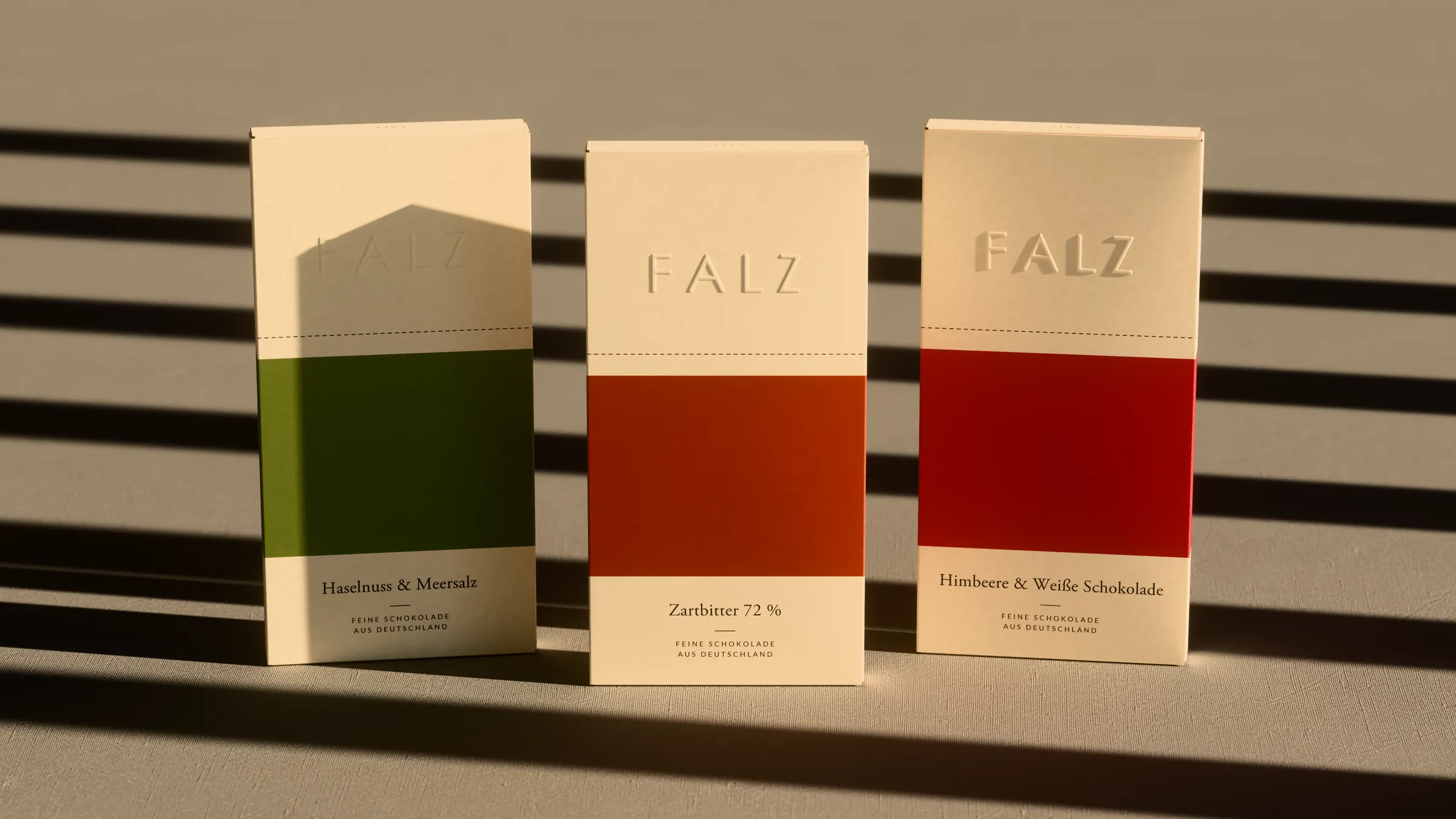
What CGI enables that photography can only do with limits
Product photography captures one specific setup. One light direction, one surface, one angle, one moment. If the product changes, the campaign shifts or a new format is needed, production often starts again.
CGI works differently. Once model, materials and scene are built, the asset stays editable. That is where the value shows up:
- Variants without a reshoot. New labels, different colours, added SKUs or alternate scene versions come from the same master setup.
- Campaign assets before samples exist. Photoreal product CGI can be produced before the product is physically available, which is what makes launch planning, retailer presentations and investor material possible on time.
- Consistency across markets and channels. The same product renders for multiple markets and rollout needs with camera, lighting and material language perfectly aligned.
- Flexible output across formats. A single scene generates 1:1, 4:5, 9:16 or 16:9 without rebuilding the production logic.
- Controlled material and light behaviour. Reflections, glass, liquid, metallic finishes and lighting transitions can be tuned with far more precision than in most physical studio environments.
Where product photography is still the better choice
CGI is not the answer to every visual problem. There are clear cases where photography makes more sense.
- People-led and lifestyle imagery. As soon as real people interact with the product, photography usually becomes the stronger option. Hands, skin, fabric and spontaneous situations are still handled better photographically.
- Highly tactile natural materials. Leather, textiles, aged wood and handmade surfaces carry subtle imperfections that are hard to reproduce convincingly within normal timelines and budgets.
- Small one-off jobs. If a brand needs one quick product image, photography is often faster and cheaper than building a CGI-ready product from scratch.
- Brands that want rawness on purpose. Some visual systems rely on imperfect, documentary-style photography. CGI would work against the intended tone.
What CGI costs, and when it pays off
There is no useful single number, because the build is the cost driver and the build depends on the product. A simple bottle with a flat label is a different job from a mechanism with moving parts or packaging with a complex die-cut.
What is predictable is the shape of the curve. Photography costs roughly the same for image one and image ten, because each is a setup. CGI front-loads: the first image carries modelling, materials and lighting, and everything after it is comparatively cheap.
So the honest comparison is not per image, it is per launch. Count every asset you will actually need over the next twelve months, including the variants you already know are coming and the formats you will be asked for later. In most launch projects that number is far higher than the initial brief suggests, and that is the point where CGI stops being the expensive option.
What drives the cost in a CGI project
- Geometry. Is there usable CAD, or does the product have to be rebuilt from photographs and drawings?
- Material difficulty. Matte cardboard is quick. Brushed metal, glass and liquid are not.
- Number of hero setups. Each new scene is a new lighting build. Additional angles inside an existing scene are cheap.
- Motion. Animation adds time in a different order of magnitude than stills.
- Revisions. A clear brief with brand guides and references usually costs less than two additional rounds.
What this looks like in practice
Three examples, each with a different reason for taking the CGI route.
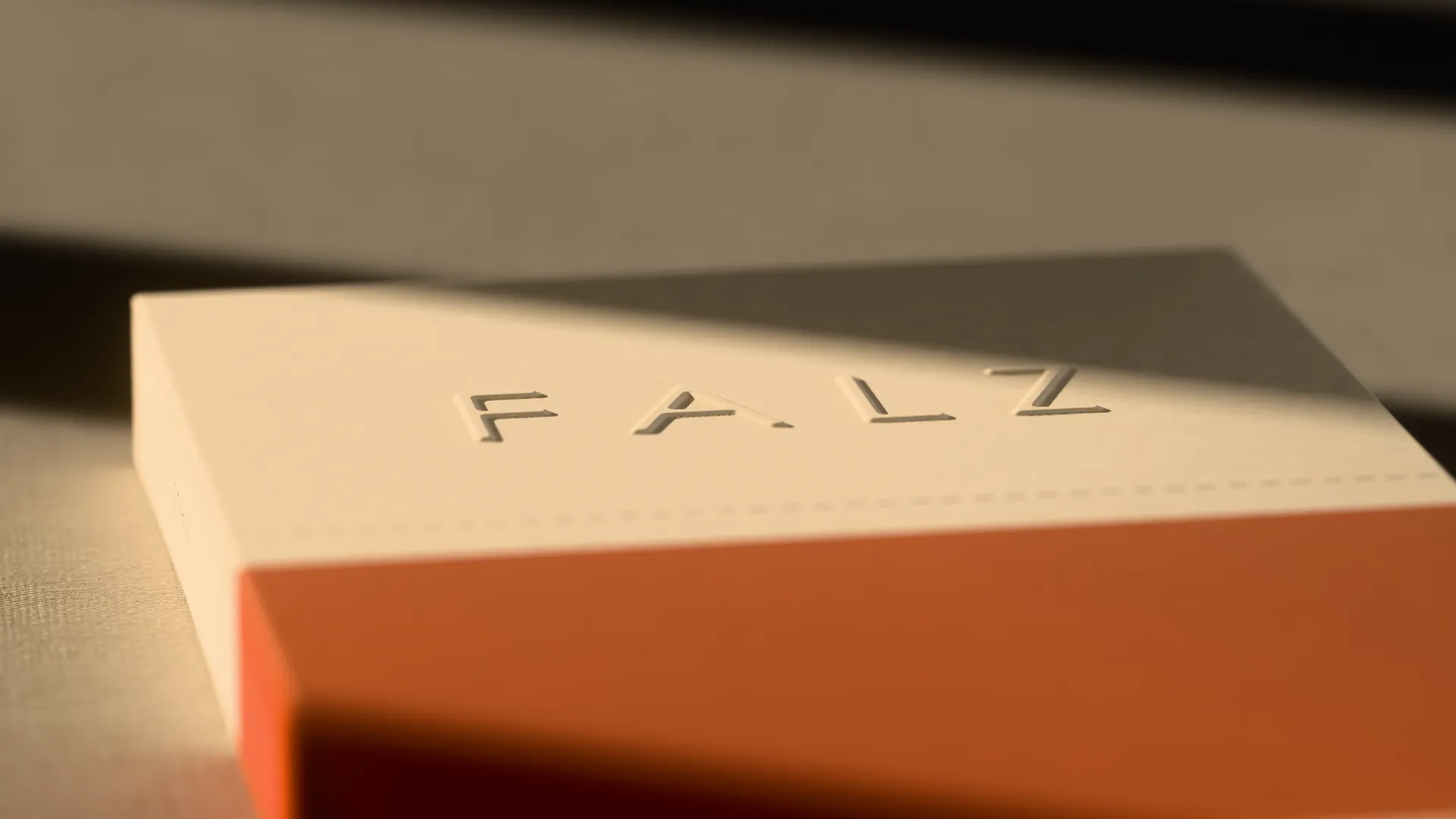

Read on: what a CGI project needs from you and how many product images a launch actually needs.
What this means for your next product launch
The takeaway is not that every brand should replace photography. The better question is which parts of your asset production should be designed as CGI from the beginning.
- Bring CGI into the brief early. The earlier it is considered, the easier it is to plan formats, variants and future extensions properly.
- Think in asset systems, not isolated images. A strong 3D scene is a reusable production base for later formats, updates and campaign variations.
- Decide per asset, not per project. Most launches are best served by a mix: CGI for product, packaging and variants, photography for people and lifestyle.
Frequently asked questions
No. For a single simple image it usually is, because the 3D build has to happen first. Across a launch with several variants and formats it is usually the cheaper route, because the build is paid once and every further asset comes out of the same scene.
For most product categories, yes, and the deciding factor is material work rather than render power. Glass, liquid and coated surfaces are where a render is won or lost. Skin, hair and food remain the harder cases.
CAD data is ideal. Dimensioned drawings plus good reference photographs work as well. On top of that, artwork as vector or print data, brand guides if they exist, and a note on where the assets will be used.
The first asset usually takes longer than a shoot, because modelling and lookdev come first. Every further variant and format is much faster, which is why the comparison only becomes meaningful across a whole launch.
Yes, and for many launches that is the right answer. Product and packaging from CGI, people and lifestyle from a shoot. The critical part is matching light direction and colour so both live in the same visual world.
They are useful for moodboards and early exploration. They are not reliable for commercial product visuals, because a specific product with a specific label, proportion and finish is exactly what a generative model does not reproduce accurately. A closer look at AI versus CGI.